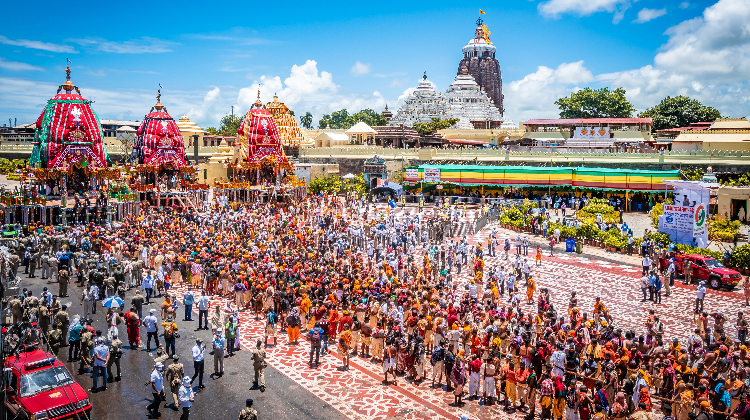


Rukuna Ratha Yatra of Lord Lingaraj Temple, A Sacred Journey Through Time!
- 2025-04-05
- 250 views

The Rukuna Ratha Yatra is one of the most revered and ancient festivals of Odisha, celebrated with great devotion and grandeur in Bhubaneswar, the state’s capital city. Centered around the iconic Lingaraj Temple, this festival is a profound expression of faith, tradition, and cultural heritage, drawing thousands of devotees and visitors each year.
Historical and Religious Significance
The Lingaraj Temple, a splendid example of Kalinga architecture, dates back to the 11th century and stands as a major symbol of Bhubaneswar’s spiritual identity. Dedicated to Lord Lingaraj, a manifestation of Lord Shiva, the temple is one of the most important Shaivite shrines in India.
The Rukuna Ratha Yatra takes place on the occasion of Ashokashtami, falling in the Chaitra month (March-April) of the Hindu lunar calendar. It commemorates the ceremonial journey of Lord Chandrasekhar, the representative idol of Lord Lingaraj, who travels in a majestic chariot to the Rameswara Temple, about 2 kilometers away. The journey symbolizes a divine visit and blessing to the devotees and the city.
The Rukuna Rath – A Chariot of Tradition
The chariot used in the Rukuna Ratha Yatra is known as the Rukuna Rath, a large wooden structure with four solid wheels and a towering canopy. Crafted annually by skilled artisans, the chariot is adorned with colorful fabrics, sacred symbols, and flower garlands. The term “Rukuna” comes from the Odia phrase “Rukuna Ratha Analeuta,” meaning “the chariot does not turn back.”
Uniquely, during the return journey, the chariot is not turned around. Instead, it is pulled in reverse back to the Lingaraj Temple, signifying the sacred belief that the Lord should not look back while returning. This rare ritualistic detail sets the Rukuna Ratha apart from other chariot festivals in India.
The Rituals and Celebrations
The celebrations begin early in the morning on Ashokashtami with the Pahandi Bije, a ceremonial procession in which the idol of Lord Chandrasekhar is brought out of the sanctum and placed onto the chariot. The deities Rukmini and Basudeva accompany the Lord on this sacred journey.
Devotees pull the chariot with ropes, chanting “Har Har Mahadev” and singing devotional songs. The air resonates with the sound of conch shells, bells, and traditional instruments. The procession winds through the historic lanes of Old Bhubaneswar, culminating at the Rameswara Temple, where the deities stay for four days.
On the fifth day, the Bahuda Yatra (return journey) takes place, with the chariot being drawn backward to the Lingaraj Temple.